Shashi Ranakoti
Owner
How Many Tigers Are There in Rajaji National Park? Latest Numbers & Facts
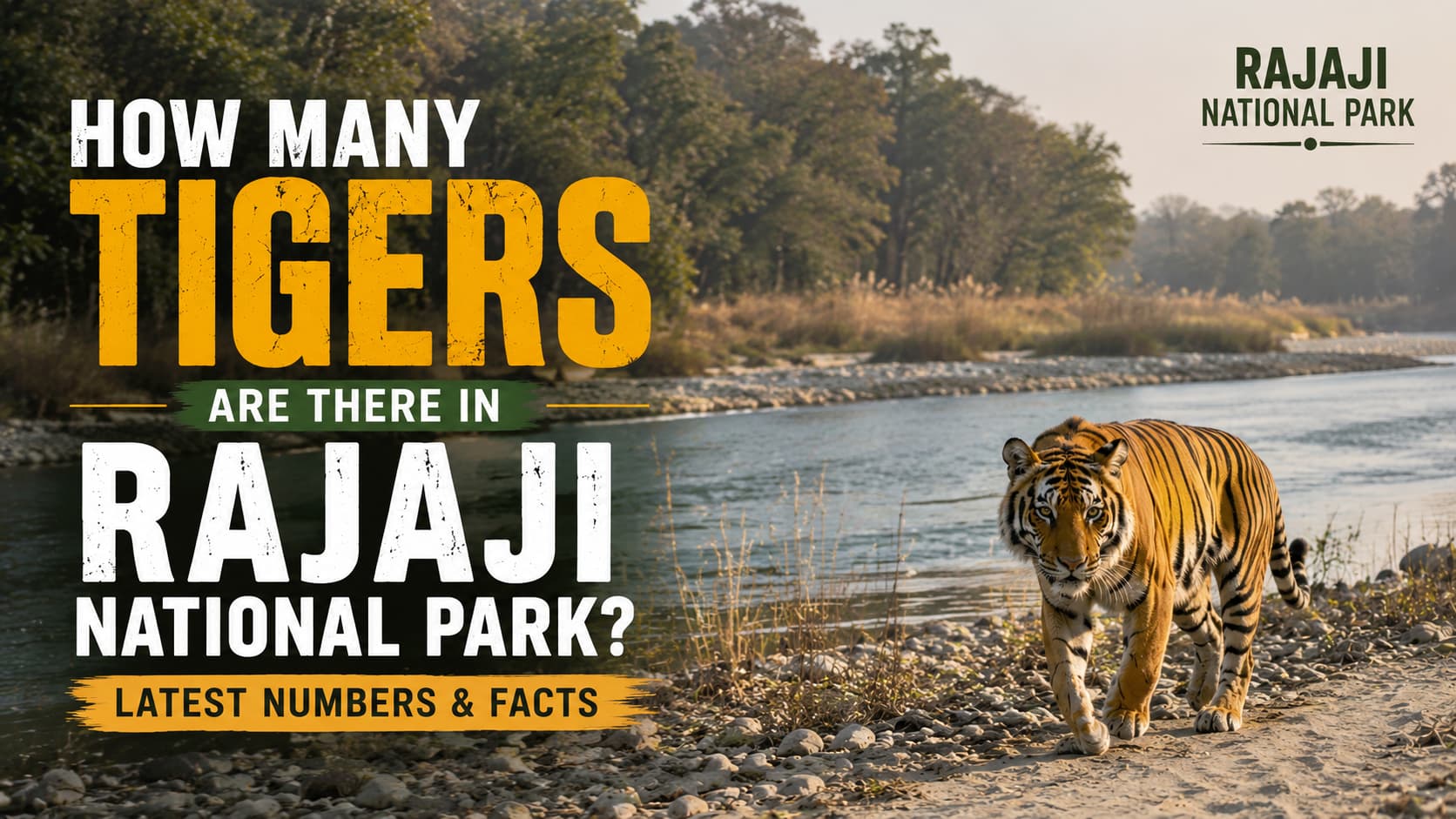
Rajaji National Park, spread across the Shivalik foothills near Rishikesh and Haridwar, is one of North India's most significant tiger habitats. Declared a tiger reserve in 2015, it has since become an important part of India's tiger conservation network but the exact number of tigers here is a question that changes as forest department surveys and camera-trap census data get updated over time.
If you're planning a wildlife trip and want to understand the park's tiger population, sighting probability, and what these numbers actually mean for your safari experience, here's a complete, honest breakdown.
Tiger Population in Rajaji National Park: The Current Picture
Rajaji National Park's tiger population has been steadily recovering since it was declared a tiger reserve in 2015. According to forest department estimates and periodic tiger census exercises conducted under India's National Tiger Conservation Authority (NTCA) framework, the park is currently home to a growing population of tigers, with numbers reported in the range of 35 to 50+ individuals depending on the most recent survey cycle.
It's worth understanding that tiger census figures are not static numbers that stay fixed year after year. They're updated periodically, typically every four years, as part of India's All India Tiger Estimation exercise, alongside more frequent camera-trap monitoring conducted by the state forest department throughout the year. Because of this, the "exact" figure you come across can vary slightly depending on the source, the survey method used, and the year the data was collected.
For travelers who want the most accurate, official figure at the time of their visit, it's always worth checking directly with the Uttarakhand Forest Department, or simply asking your safari operator, since operators who work closely with the park tend to stay updated on the latest official communications and forest department reports.
Why Rajaji's Tiger Numbers Have Been Rising
Several factors have contributed to the steady increase in Rajaji's tiger population over the past decade, and understanding them helps explain why this reserve has become an increasingly important part of India's tiger conservation story.
Tiger Reserve status since 2015 brought a completely different level of protection to the park. Before this designation, Rajaji operated more like a standard protected forest. Reserve status introduced stricter anti-poaching protocols, dedicated conservation funding, and more structured wildlife monitoring all of which directly support population growth over time.
Corridor connectivity is another major factor. Rajaji doesn't exist in isolation; it forms part of a larger wildlife corridor that connects to other forest belts in the region. This connectivity allows tigers to move between habitats, which supports genetic diversity and reduces the risks associated with isolated, inbred populations a common problem in smaller, disconnected reserves.
Reduced human-wildlife conflict zones have also played a role. Over the years, the relocation of a few forest villages from core habitat areas has expanded the amount of undisturbed territory available for tigers to establish stable home ranges without frequent human interference.
Finally, a healthy and recovering prey base has supported the entire food chain. Spotted deer, sambar deer, and wild boar populations have grown steadily within the reserve, giving tigers a reliable and sustainable food source, which is one of the most fundamental requirements for any big cat population to thrive and expand.
Which Zones Have the Highest Tiger Presence?
Not all five safari zones of Rajaji National Park have equal tiger density, and understanding this difference can genuinely shape how you plan your visit.
Chilla Zone consistently records the highest tiger presence among the five zones. Its open riverside terrain, bordered by the Ganga canal, creates ideal sightlines and naturally draws tigers toward water sources, particularly during the warmer months. This is also the reason Chilla is the busiest and most frequently booked zone in the park.
Motichur Zone has a moderate tiger presence, but its dense sal forest cover makes actual sightings more challenging compared to Chilla. Tigers are certainly present here, but the thick vegetation gives them far more natural cover to remain unseen.
Mohand Zone also sees moderate tiger activity, and it has the added advantage of being a quieter zone with noticeably less jeep traffic than Chilla, which some experienced wildlife travelers actually prefer.
Ranipur Zone, in contrast, is better known as leopard territory rather than tiger territory. Its rocky, hilly terrain favors leopard movement over tiger activity, so while tigers aren't absent here, it isn't the zone to choose if tiger sighting is your primary goal.
Jhilmil Jheel, being a wetland habitat, sees the lowest tiger activity of all five zones. It's far better suited to swamp deer, waterfowl, and birdlife than to tiger sightings, and travelers focused specifically on tigers are usually better served by choosing a different zone.
If tiger sighting is genuinely your top priority for the trip, Chilla Zone remains the most consistent choice based on both forest department data and years of accumulated sighting reports from operators working in the park.
Does a Higher Tiger Count Mean Guaranteed Sightings?
This is an important distinction that's easy to misunderstand. A rising tiger population is genuinely encouraging conservation news, and it does improve your overall odds over time. But it doesn't translate directly into a "guaranteed sighting" for every individual safari guest, and it's important to be upfront about that.
Tigers are territorial, largely solitary animals that naturally avoid unnecessary exposure during the day, especially in warmer weather when moving around costs more energy than it's worth. Even in zones with strong recorded tiger density, actual sightings on any given day depend on a combination of factors working in your favor.
Time of day makes a significant difference. Early morning safaris consistently offer better chances than midday or evening slots, since tigers tend to be most active in the cooler hours right after sunrise, before retreating into shaded cover as temperatures rise.
Season matters just as much. The period from March through June, closer to the park's closing date of June 30, typically sees increased waterhole-dependent movement as the forest dries out, which naturally improves visibility and predictability of tiger movement patterns.
Guide experience is often underestimated by first-time visitors, but it genuinely changes outcomes. Reading fresh pug marks, recognizing alarm calls from deer and langurs, and staying updated on recent activity reports from other guides in the park can be the difference between a routine drive and an actual sighting.
Weather and terrain conditions on the specific day of your visit also play a role, sometimes in ways that are simply outside anyone's control.
Put simply, a healthier tiger population generally means better long-term odds across the season as a whole, but no responsible operator, including us, can honestly promise a sighting on any single safari. Anyone who does isn't being straight with you.
How Does Rajaji Compare to Other Tiger Reserves in India?
Rajaji is smaller in overall tiger numbers compared to more famous reserves like Jim Corbett National Park, which holds one of India's highest tiger densities, or Ranthambore, known for its relatively open terrain and frequent sightings.
However, Rajaji offers a genuinely distinct advantage that's easy to overlook: significantly less crowding compared to these more heavily visited parks. It's also considerably closer to Rishikesh and Delhi than many alternative reserves, which matters for travelers working with limited time. Beyond that, Rajaji's ecosystem is genuinely diverse, combining wetlands, dense sal forest, and open grassland within a single reserve, supporting not just tigers but elephants and leopards as well.
For travelers who want a quieter, less commercialized wildlife experience without giving up on genuine sighting potential, Rajaji often ends up being a strong, underrated alternative to the more heavily promoted reserves that tend to dominate most people's first instinct when planning a tiger safari in North India.
Planning Your Safari Around Tiger Sighting Potential
If tiger sightings are a genuine priority for your trip, a few practical decisions can meaningfully improve your chances.
Choosing Chilla Zone gives you access to the highest recorded tiger density among Rajaji's five safari zones, based on consistent sighting patterns over recent seasons. Booking a morning safari slot rather than an evening one puts you in the forest during the hours when tigers are naturally most active. Planning your visit between March and June, rather than earlier in the season, takes advantage of the dry-season waterhole dependency that makes tiger movement more predictable.
It's also worth booking in advance, particularly for weekends, since popular zones and preferred time slots fill up quickly during peak months. And finally, asking your operator about recent activity reports before your safari date can make a real difference, since experienced teams that track pug marks and stay in touch with forest department updates are able to plan smarter routes rather than simply following a fixed loop regardless of what's actually happening in the forest that week.
Final Thoughts
Rajaji National Park's growing tiger population reflects genuine conservation progress over the past decade, and it's a meaningful part of why the park has become an increasingly compelling wildlife destination near Rishikesh. But numbers alone don't tell the whole story. Sighting probability depends on timing, zone selection, seasonal patterns, and the experience of the guide sitting in front of you, just as much as it depends on how many tigers currently call the reserve home.
Understanding this balance helps set the right expectations before you book, and it's part of what makes the difference between a disappointing safari and one that genuinely lives up to the experience you were hoping for.
Frequently Asked Questions
Get answers to common questions about your safari experience at Raja ji National Park.
Recent Posts

Birds of Rajaji National Park – A Visitor's Guide to 400+
Discover the birds of Rajaji National Park. A visitor's guide to 400+ species, the best zones for birdwatching, and when to visit.

Rajaji National Park vs Jim Corbett – Which Suits You?
Comparing Rajaji National Park and Jim Corbett? See which offers a quieter, more diverse safari experience for your Uttarakhand trip.
Rajaji National Park Ticket Price 2026: Fees & Booking Guide
Complete Rajaji National Park ticket price guide: entry fee, jeep safari cost, timings, zones and step-by-step booking. Updated for the 2026-27 season.