Shashi Ranakoti
Owner
How Wildlife Researchers Track Tigers & Elephants in Rajaji National Park
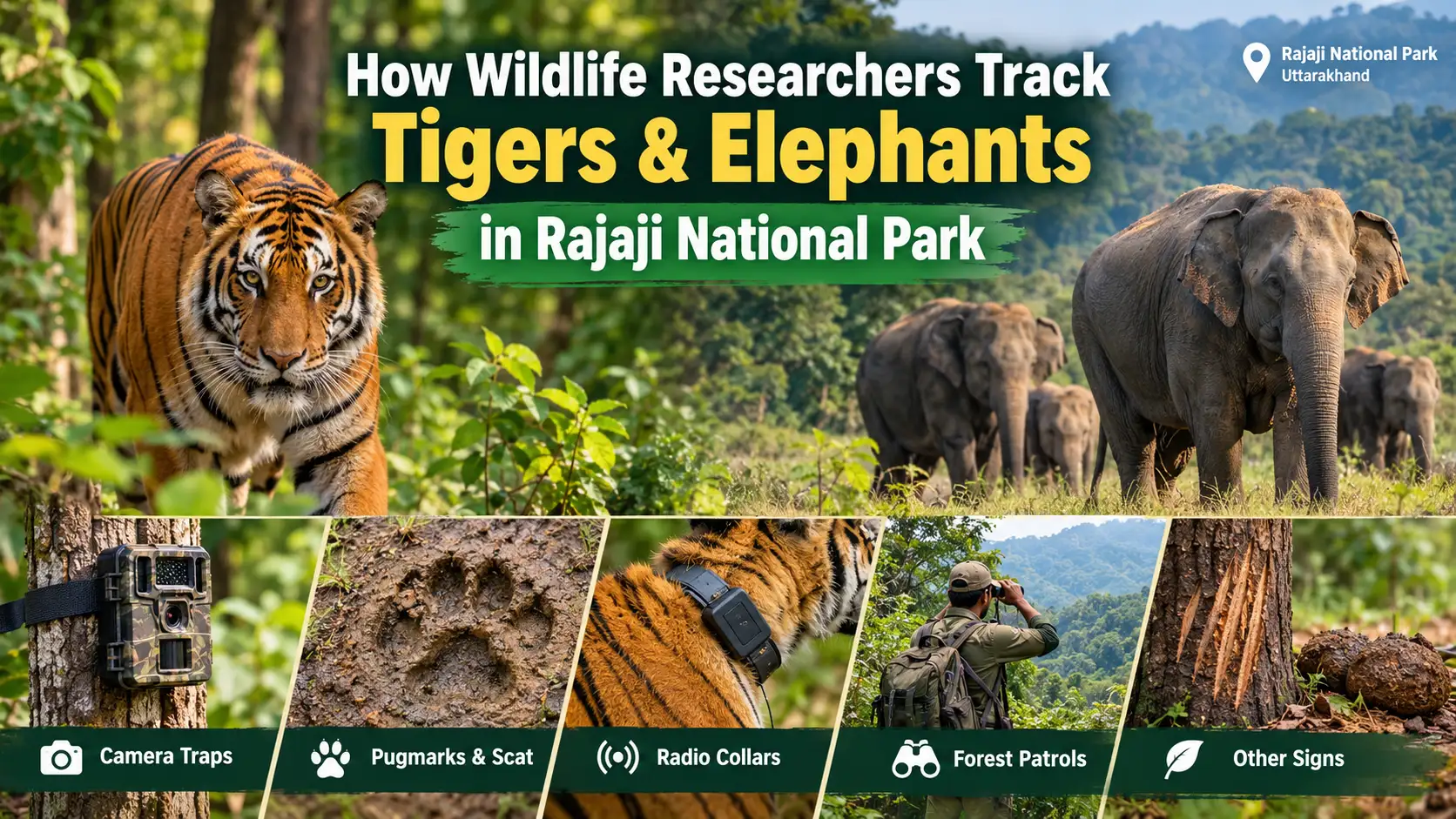
Wildlife researchers track tigers and elephants in Rajaji National Park using camera traps, pugmark and scat surveys, radio collars, and daily forest patrols. Together, these methods show how many animals live in the park, where they move, and what they need to survive.
Rajaji National Park spreads across the Shivalik foothills of Uttarakhand, close to Rishikesh, Haridwar and Dehradun. It is home to Asian elephants, Bengal tigers, leopards, deer and hundreds of bird species. Most visitors see only a small part of this wild world. Behind the scenes, forest teams and scientists work all year to keep watch on the animals.
In this guide, you will learn:
- Why wildlife monitoring is important in Rajaji National Park
- How camera traps, pugmarks and radio collars work
- How elephants are tracked differently from tigers
- What you can notice yourself on a jungle safari
Why Wildlife Monitoring Matters in Rajaji National Park
Monitoring tells forest officers if wildlife is growing, shrinking or in danger. Rajaji covers about 820 sq km and became a tiger reserve in 2015. The Ganga river splits it into a western part (Rajaji and Motichur) and an eastern part (Chilla), so animals must cross roads, canals and railway lines to move around. Careful watching helps managers protect them.
Researchers monitor wildlife in Rajaji to:
- Count animals: Know how many tigers, leopards and elephants live in the park.
- Study movement: Find the paths and corridors animals use, especially elephants.
- Check the health of the forest: See if there is enough prey like chital and sambar for big cats.
- Reduce conflict: Warn villages when elephants or leopards come close to farms.
- Support new tigers: Watch tigers that were brought from Corbett to western Rajaji to build the population again.
Camera Traps: The Silent Watchers of Rajaji
Camera traps are the most common tool for tracking tigers in Rajaji National Park. These are weatherproof cameras tied to trees along forest trails. A sensor starts the camera when an animal walks past, day or night.
In January 2021, the Uttarakhand Forest Department set up about 100 camera traps in the western part of Rajaji to watch tigers relocated from Corbett Tiger Reserve.
How camera traps help:
- Every tiger has a unique stripe pattern, like a human fingerprint. Researchers use it to identify each tiger.
- Photos show the animal's sex, age, health and movement.
- They also capture leopards, elephants, deer, sloth bears and even rare night visitors.
- Cameras work 24 hours without disturbing the animals.
Researchers collect memory cards every few weeks, then sort and study the photos on a computer.
Pugmarks, Scat and Other Signs on the Forest Floor
Before modern technology, trackers read the forest floor, and they still do. Field teams walk fixed routes and note every sign of wildlife.
- Pugmarks (footprints): The size and shape show which animal passed, and sometimes its size and direction.
- Scat (dung): Shows what the animal ate. For elephants, dung counts also help estimate how many live in an area.
- Scratch marks: Tigers scratch trees to mark their territory.
- Kills and carcasses: Show what prey tigers and leopards are hunting.
- DNA from scat or hair: Lab tests can identify individual animals without catching them.
These signs are cheap to collect and work well in thick forest where cameras may miss animals.
Tracking Elephants and Tigers with Radio Collars
Radio collars give the most detailed picture of how a single animal moves. A collar is fitted by trained wildlife veterinarians. It sends signals that ground teams, and sometimes satellites, can follow. In Rajaji, tigers moved from Corbett were fitted with collars before release, so teams could follow where they went.
How elephants are tracked differently:
- Elephants live in herds and cover long distances, so researchers watch their corridors, the paths they use between forest patches.
- Teams record herd size, calves, tuskers and the time of day elephants use certain routes.
- Field staff and local villagers share quick alerts when herds come near roads or farms.
- Direct observation and dung counts give a good picture of numbers over time.
Collars are used on only a few animals, because they are costly and need careful handling. Even one collared animal can teach researchers a lot about its whole group.
Forest Patrols and Field Surveys
Technology works best with people on the ground. Forest guards, rangers and wildlife researchers patrol Rajaji every day.
- Foot and vehicle patrols check trails, water holes and boundaries.
- Anti-poaching watch helps protect animals from hunting and illegal activity.
- Prey surveys count deer and other herbivores along fixed lines, because tigers need enough prey to stay.
- Water and habitat checks show if forest, grass and water are healthy.
- Training and local help: Trained tracking teams and nearby communities are often part of the work.
Working together, these teams can react fast if an animal is hurt, strays out of the park or comes close to a village.
Monitoring Methods at a Glance
What You Can Notice on a Rajaji Jungle Safari
You do not need to be a scientist to spot the same signs researchers use. On a guided jungle safari near Rishikesh, keep an eye out for:
- Fresh pugmarks on sandy tracks
- Elephant dung and broken branches along paths
- Scratch marks on tree trunks
- Alarm calls from chital and langur, which often warn of a leopard or tiger nearby
- Camera traps fixed on trees (please never touch them)
A local naturalist guide can explain these signs, which makes the ride much more rewarding. If you plan to visit, you can explore options for a Rishikesh Tiger Safari and see this wild landscape yourself.
Good safari tips: stay quiet, keep your distance from wildlife, follow the guide's advice and carry water and a hat.
Conclusion
Researchers track tigers and elephants in Rajaji National Park with a mix of camera traps, footprints, dung and DNA, radio collars and daily patrols. No single method is enough, but together they give a clear and reliable picture of wildlife and help protect it for the future.
The next time you visit Rajaji, look closely at the trails and trees. You might spot the same clues that scientists use every day.
Frequently Asked Questions
Get answers to common questions about your safari experience at Raja ji National Park.
Recent Posts

Birds of Rajaji National Park – A Visitor's Guide to 400+
Discover the birds of Rajaji National Park. A visitor's guide to 400+ species, the best zones for birdwatching, and when to visit.

Rajaji National Park vs Jim Corbett – Which Suits You?
Comparing Rajaji National Park and Jim Corbett? See which offers a quieter, more diverse safari experience for your Uttarakhand trip.
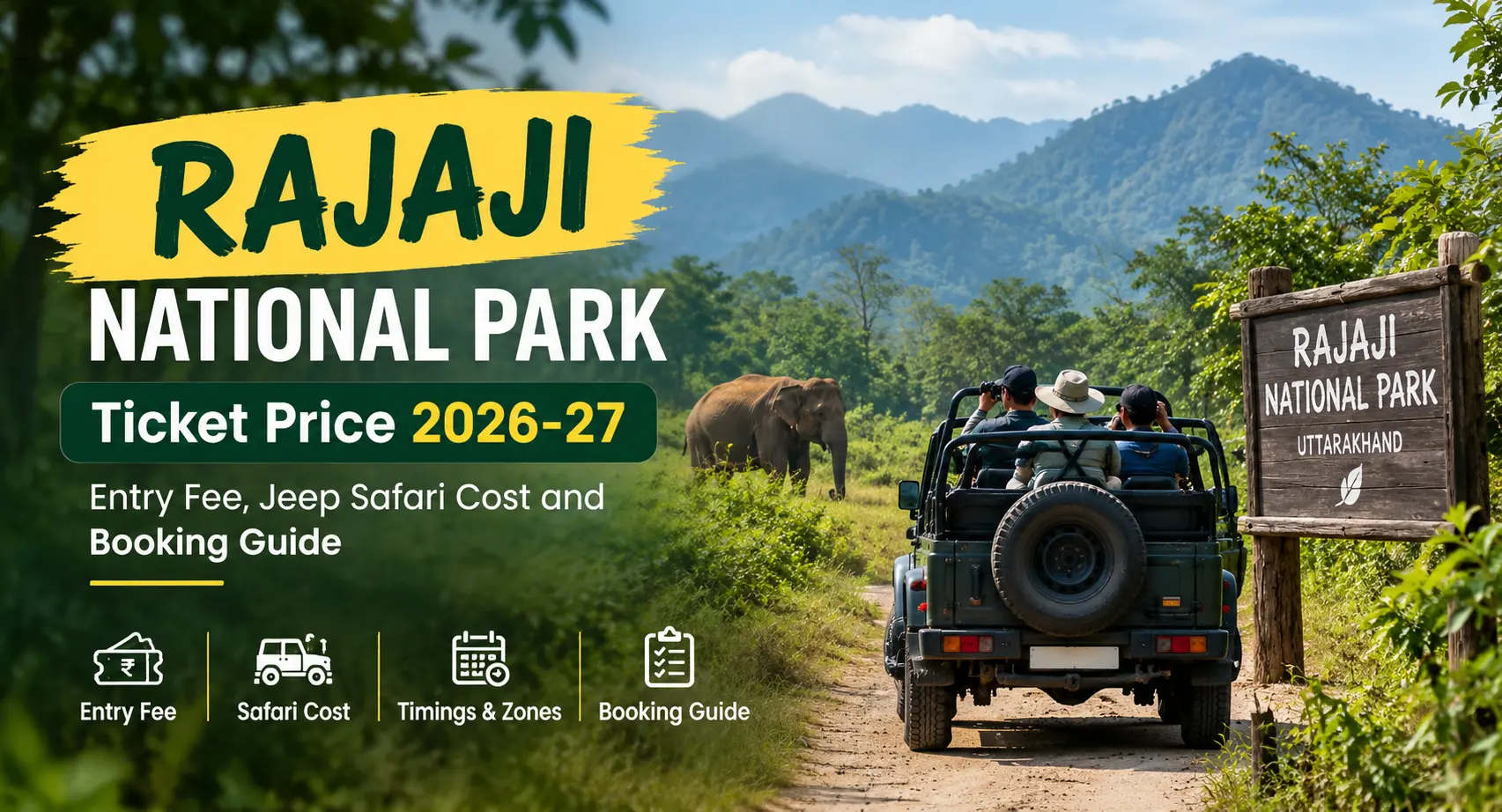
Rajaji National Park Ticket Price 2026: Fees & Booking Guide
Complete Rajaji National Park ticket price guide: entry fee, jeep safari cost, timings, zones and step-by-step booking. Updated for the 2026-27 season.