Shashi Ranakoti
Owner
Top Animals You Can Spot at Rajaji National Park, Rishikesh
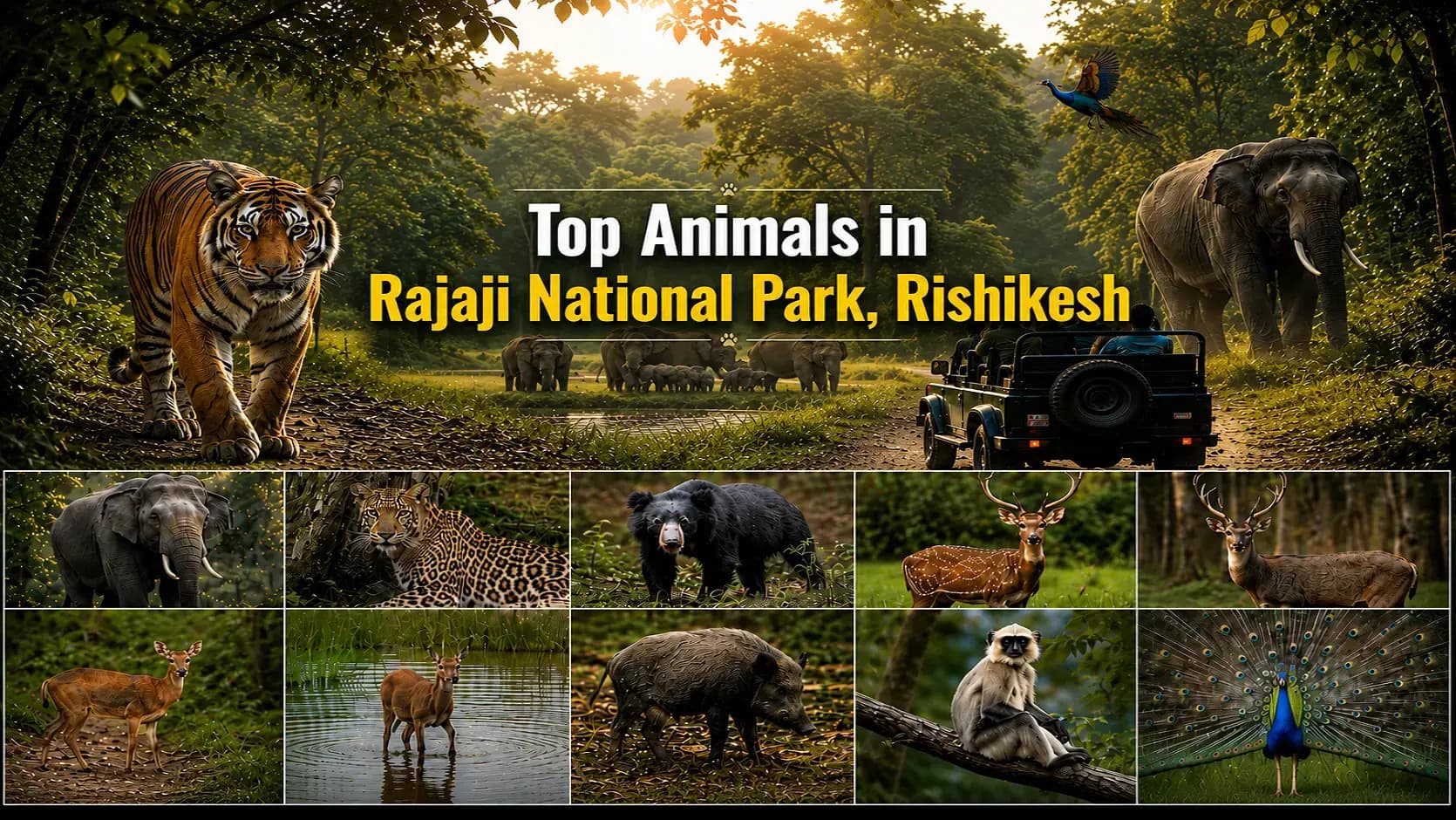
If you're planning a safari near Rishikesh, the first thing you probably want to know is simple: what animals in Rajaji National Park, Rishikesh will you actually get to see? It's a fair question, and it's usually the first one guests ask before they even think about which zone to book. Rajaji National Park is home to a genuinely wide mix of wildlife, from tigers and wild elephants to leopards, sloth bears, and hundreds of bird species, all spread across five different safari zones.
This guide covers the animals you can look out for at Rajaji National Park Rishikesh, based purely on what's known about the park and its zones, so you can go in with realistic expectations rather than guesswork or borrowed hype from somewhere else.
Why Rajaji National Park Is Known for Wildlife
Rajaji National Park became a tiger reserve in 2015 and today holds one of the largest wild elephant populations in North India, which alone makes it one of the more rewarding parks to visit in the region. Over 400 bird species have been recorded here, which is a big reason birders keep coming back trip after trip.
The park is spread across the Haridwar, Dehradun, and Pauri Garhwal districts of Uttarakhand, and its terrain changes a lot from one zone to the next, from dense forest to open grassland to rocky hillsides. That variety is exactly why the wildlife here isn't spread evenly, and it's why picking the right zone matters more than most first-time visitors expect.
One thing worth saying clearly before we go further: wildlife sightings are completely natural and can never be guaranteed. Every safari is different, and honestly, that's part of what makes it worth doing in the first place.
Top Animals You Can Spot at Rajaji National Park, Rishikesh
Tiger – Rajaji has been a tiger reserve since 2015, and tiger sightings are one of the main reasons people book a safari here in the first place. As with any reserve, spotting one depends on timing, the zone you choose, and a fair bit of luck.
Asian Elephant – Elephants are one of the defining animals of this park. Rajaji holds one of the largest wild elephant populations in North India, and herds are regularly seen moving through the forest, often close to the safari routes.
Leopard – Leopards prefer rockier terrain, and their presence is well documented in the parts of the park with hilly, rocky ground, where they tend to move quietly and stay well camouflaged.
Sloth Bear – Sloth bears are part of the wildlife mix in the park's quieter, rockier stretches, usually alongside deer and langurs in the same terrain.
Spotted Deer (Chital) – Spotted deer are among the most commonly seen animals across the park's safari routes, often in small grazing groups.
Sambar Deer – Sambar deer are also found commonly across the park and are one of the more frequently spotted deer species on a typical safari.
Barking Deer – Barking deer show up regularly too, and you're likely to come across them regardless of which route you take, even if only briefly.
Swamp Deer – Swamp deer are genuinely special here. They're found nowhere else in Uttarakhand outside one wetland zone of this park, which makes any sighting feel a little more significant.
Wild Boar – Wild boar are common across the forest, particularly in the denser, sal-forest stretches where cover and food are both plentiful.
Langur – Langurs are a regular sight through much of the park, often seen moving in troops through the tree canopy.
Rhesus Monkey (Monkeys) – Alongside langurs, monkeys are commonly spotted on almost every safari route here, usually near water sources or forest edges.
Peacock – Peacocks appear in more than one part of the park and are one of the more reliably spotted birds, especially in the early morning light.
400+ Bird Species – With over 400 recorded species, Rajaji is a serious birding destination, especially around its wetland habitat, which draws a fair number of dedicated photographers on its own.
Reptiles & Small Mammals – Reptiles and smaller mammals are part of the broader ecosystem you pass through on any safari, even if they're not usually the main highlight of the trip.
Wildlife Highlights by Safari Zone
Rajaji National Park has five safari zones, and each one leans toward a different set of animals, so it genuinely helps to know a bit about each before you book.
Chilla Safari Zone is the most popular zone and is known for its large elephant population and strong tiger-sighting potential, alongside spotted deer moving through open ground.
Motichur Safari Zone is defined by its dense sal forest, which makes it a good stretch for spotting elephants, wild boar, and a fair amount of birdlife along the way.
Jhilmil Jheel Safari Zone is a wetland habitat and the only home of swamp deer in the entire state. It's also known for peacocks, elephants, and its strong birding reputation, particularly around the water.
Ranipur Safari Zone has rocky, hilly terrain, which makes it one of the better zones for leopard sightings, along with sloth bears, langurs, elephants, and deer sharing the same landscape.
Mohand Safari Zone is a quieter zone known for leopard presence, spotted deer, and a strong bird count, alongside occasional tiger sightings for those willing to be patient.
Best Safari Zone for Different Wildlife
If you're choosing a zone based on what you'd most like to see, here's a simple breakdown:
- Tigers – Chilla is known for the best tiger-sighting potential in the park.
- Elephants – Chilla and Motichur both have strong, consistent elephant presence.
- Leopards – Ranipur's rocky terrain makes it the better bet.
- Swamp Deer – Jhilmil Jheel, the only zone where they're found at all.
- Sloth Bears – Ranipur, thanks to its quieter, rockier landscape.
- Birdwatching – Jhilmil Jheel and Mohand, both known for strong bird counts.
- A quieter safari with fewer jeeps – Mohand, if you'd rather avoid the crowds.
Wildlife Photography Tips
A few simple habits go a long way on any safari here, regardless of the zone you pick:
- Keep your camera or phone ready early on, since animal activity can happen without much warning.
- Stay quiet and avoid sudden movement in the jeep, especially once you're near a sighting.
- If birding is your main interest, the wetland zone is genuinely worth planning your visit around.
- Avoid flash photography near animals, both for their comfort and for better, more natural shots.
Tips Before Booking Rajaji National Park, Rishikesh
- The park has five safari zones, and each one genuinely differs in terrain and wildlife, so it's worth picking one that actually matches what you want to see.
- Wildlife sightings are natural and can never be guaranteed, no matter which zone you book or how experienced your guide is.
- Booking through an authorised operator takes care of permits, entry formalities, and vehicle arrangements, so you can just focus on the safari itself.
Conclusion
The animals in Rajaji National Park Rishikesh aren't spread evenly across the forest; they're tied closely to each zone, from Chilla's tigers and elephants to Ranipur's leopards and Jhilmil Jheel's swamp deer and birdlife. Knowing this before you go makes it much easier to pick the right safari for what you actually want to experience.
If you're ready to plan your visit, Booking Rajaji National Park, Rishikesh through an authorised operator is the simplest way to make sure your zone, timing, and permits are sorted properly, so you can focus on the forest itself.
Frequently Asked Questions
Get answers to common questions about your safari experience at Raja ji National Park.
Recent Posts
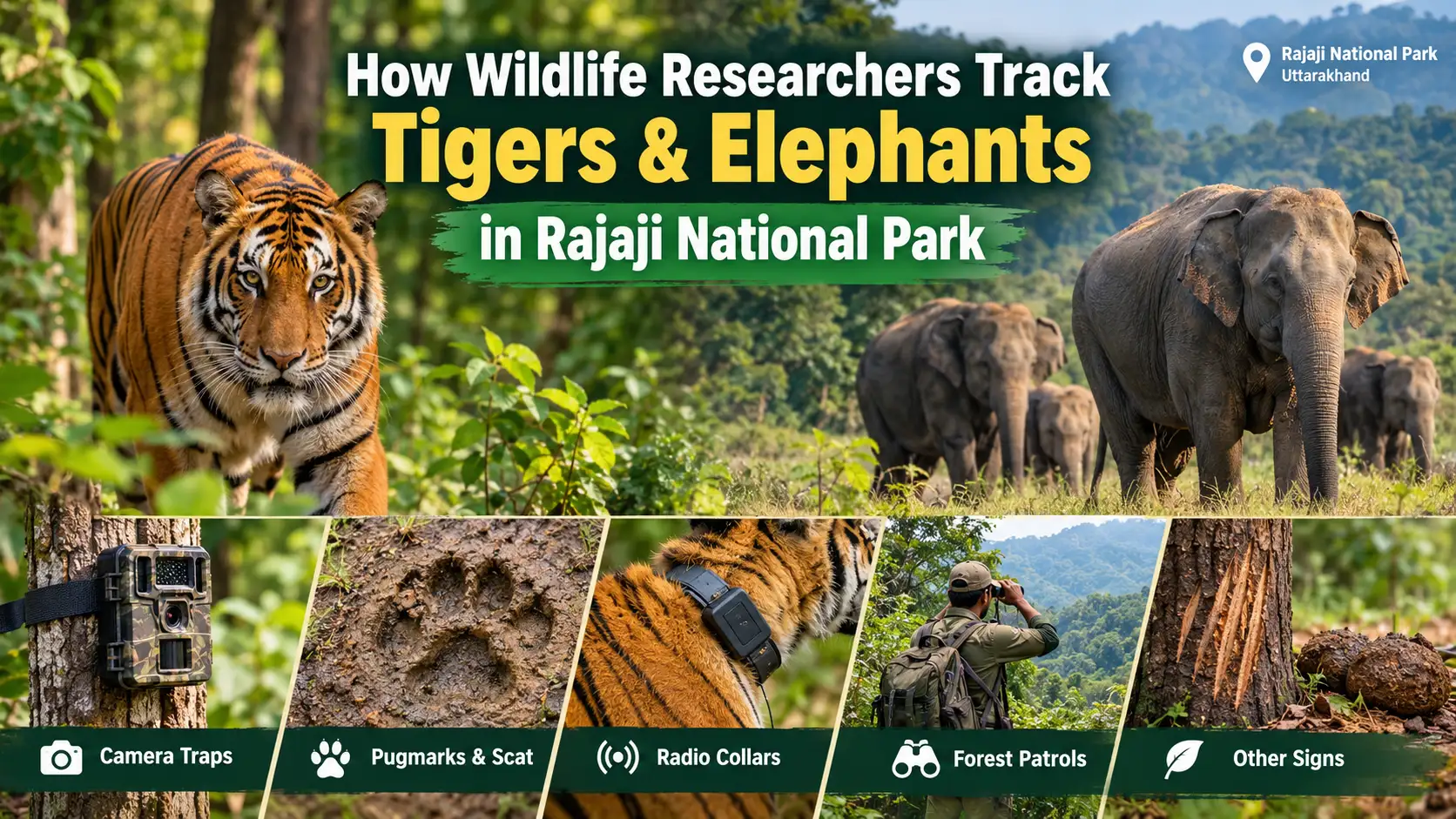
How Researchers Track Tigers & Elephants in Rajaji National Park
Learn how researchers use camera traps, pugmark tracking, patrols and radio collars to monitor tigers and elephants in Rajaji National Park near Rishikesh.
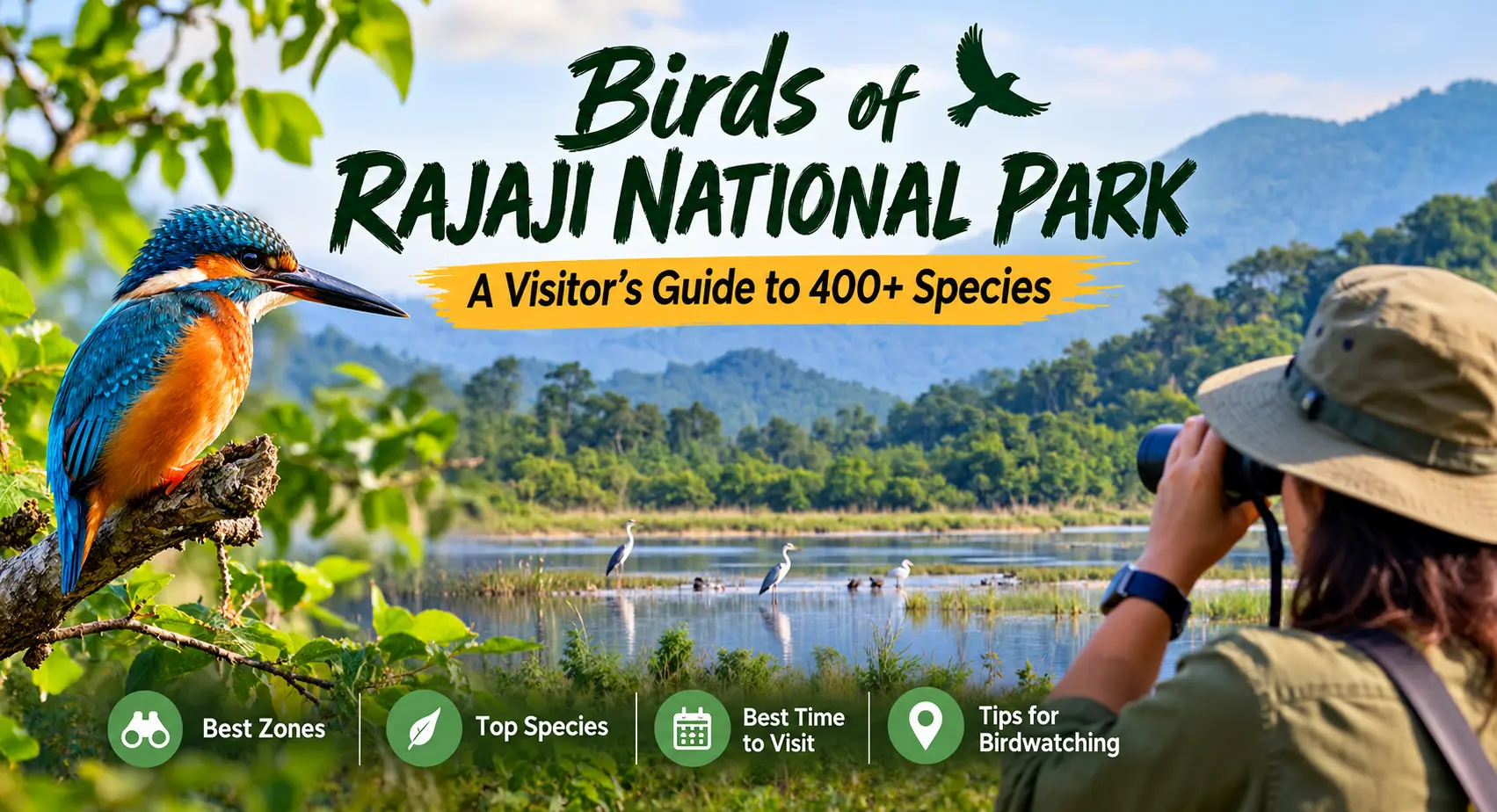
Birds of Rajaji National Park – A Visitor's Guide to 400+
Discover the birds of Rajaji National Park. A visitor's guide to 400+ species, the best zones for birdwatching, and when to visit.
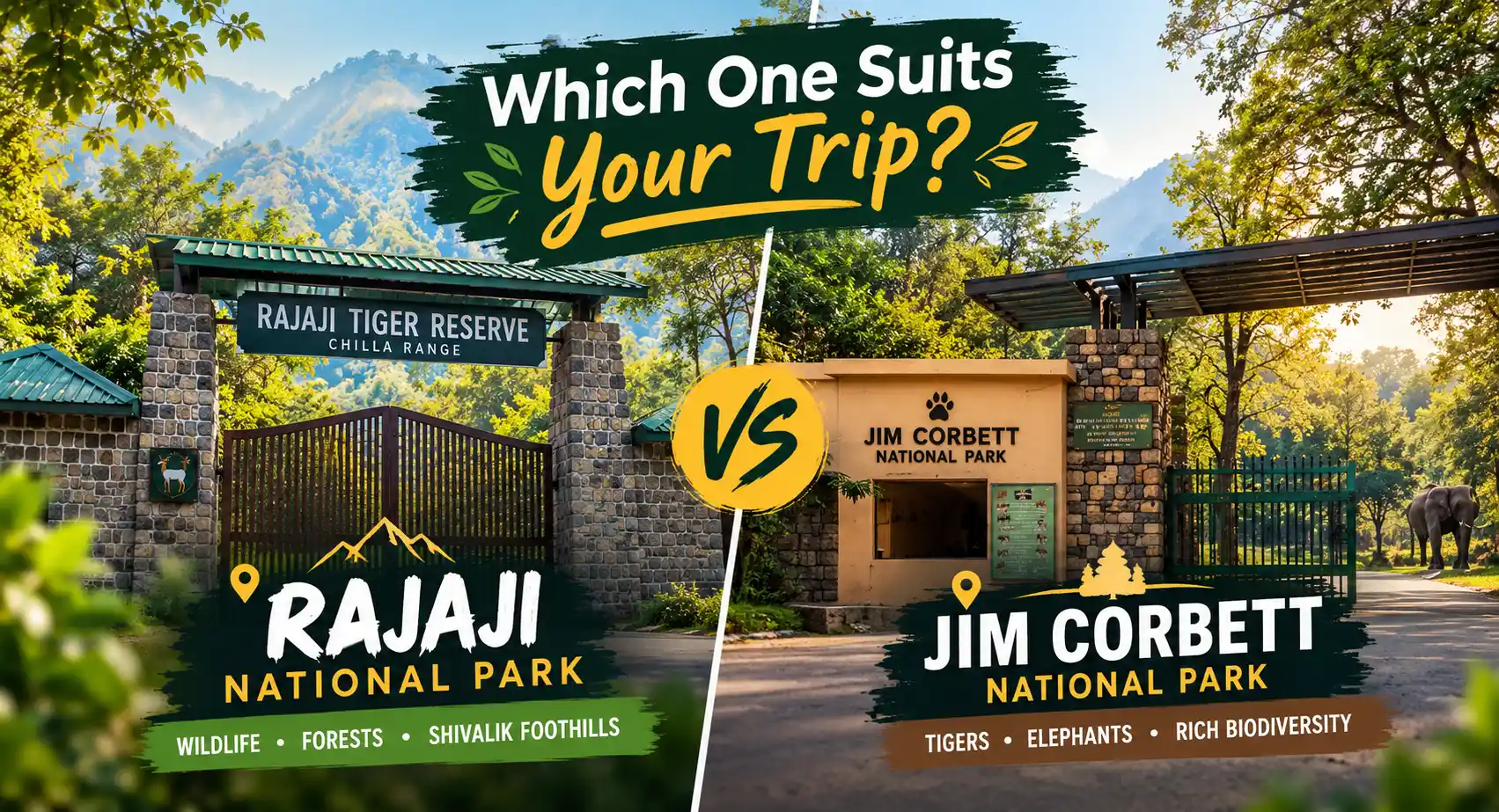
Rajaji National Park vs Jim Corbett – Which Suits You?
Comparing Rajaji National Park and Jim Corbett? See which offers a quieter, more diverse safari experience for your Uttarakhand trip.