Shashi Ranakoti
Owner
History of Rajaji National Park – How It Became a Tiger Reserve
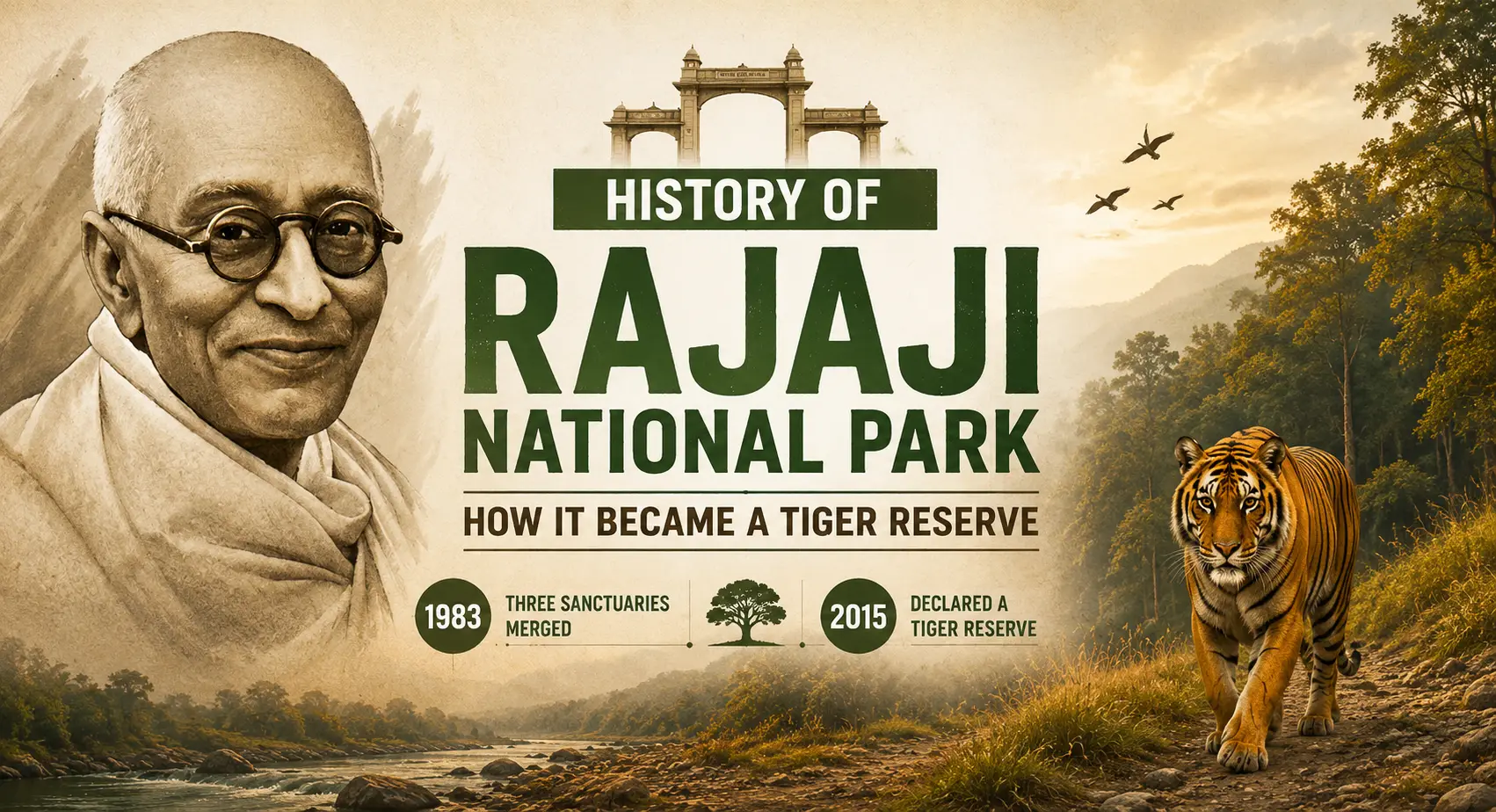
Most visitors arrive at Rajaji National Park focused entirely on the wildlife - the tigers, the elephants, the birds. Few stop to ask where the park's name actually comes from, or how this 820 sq. km. stretch of forest near Rishikesh and Haridwar came to be protected in the first place. The story behind Rajaji National Park is as layered as the landscape itself, tracing back to a freedom fighter, three separate sanctuaries, and a formal tiger reserve declaration decades later.
Who Was Rajaji? The Man Behind the Park's Name
Rajaji National Park is named after Chakravarti Rajagopalachari, who was widely and affectionately known across India as "Rajaji." Understanding who he was helps explain why a forest reserve in Uttarakhand carries his name at all, given that his own political life was centered far away in South India.
Rajagopalachari was one of India's most prominent freedom fighters and statesmen. His political career spanned some of the most significant years of the Indian independence movement, and his contributions extended well beyond activism into governance and nation-building in the years immediately following independence.
Perhaps his most historically significant role came when he served as the last Governor-General of India, holding that position until the country formally became a republic in 1950. This made him the only Indian to have held what was, until that point, largely a position occupied by British appointees - a symbolically important transition in India's early post-independence years.
In recognition of his lifelong contributions to the nation, Rajagopalachari was awarded the Bharat Ratna in 1954, India's highest civilian honor. This award is reserved for individuals whose work has had an exceptional and lasting impact on the country, and it remains one of the clearest official acknowledgments of his stature in Indian history.
Naming a forest reserve after a political and civic figure of this caliber wasn't a random choice. It reflected a broader recognition of his contribution to Indian public life, and the naming decision has endured for decades since.
From Three Sanctuaries to One Unified Park
Rajaji National Park, as it exists today, wasn't originally conceived as a single protected area. Before 1983, the region was managed as three separate wildlife sanctuaries, each protecting a distinct stretch of forest along the Shivalik foothills and the Ganga plains.
These three sanctuaries were brought together and formally unified in 1983, at which point the combined protected area was named Rajaji National Park in honor of Rajagopalachari. This consolidation was significant for more than just administrative convenience - merging three separate sanctuaries into one continuous protected landscape allowed for more coherent wildlife management, better corridor connectivity for large mammals like elephants, and a more unified conservation strategy across what had previously been fragmented jurisdictions.
This is also part of why Rajaji's terrain feels so varied even today. The park inherited the distinct ecological characteristics of each of its three founding sanctuaries - dense sal forest in some stretches, open riverside grassland in others, and rocky Shivalik terrain elsewhere. What might have remained three disconnected habitats became, instead, a single interconnected ecosystem capable of supporting a much wider range of wildlife than any one of the original sanctuaries could have sustained on its own.
The Journey Toward Tiger Reserve Status
For over three decades after its formation in 1983, Rajaji National Park operated as a national park without the additional protections and formal recognition that come with tiger reserve status. This changed in 2015, when Rajaji was officially declared a tiger reserve - a designation that brought a meaningfully different level of conservation attention to the region.
Tiger reserve status in India isn't just a symbolic title. It comes with a formal framework under the National Tiger Conservation Authority (NTCA), which includes dedicated conservation funding, stricter anti-poaching protocols, more structured population monitoring, and a legal mandate to prioritize tiger habitat protection within the reserve's boundaries. For Rajaji, this 2015 designation marked a turning point in how systematically the park's tiger population and broader ecosystem were managed going forward.
The timing of this declaration also reflected a broader national push during that period to expand and strengthen India's tiger reserve network, as part of ongoing efforts to stabilize and grow the country's wild tiger population following years of habitat loss and poaching pressure across multiple regions.
Why the History Matters for Visitors Today
Knowing this background changes how a safari through Rajaji National Park feels. The park isn't simply a patch of protected forest that happened to have wildlife in it - it's the product of a deliberate, decades-long effort that began with the merging of three separate sanctuaries in 1983 and continued with a significant conservation upgrade in 2015.
This history also explains some of what makes a visit to Rajaji distinct from other tiger reserves in India. Because it was formed by unifying three previously separate sanctuaries, the park retains genuine ecological diversity across its five safari zones - something that reserves formed as a single original protected area don't always have to the same degree.
Understanding that the park carries the name of a freedom fighter and statesman, rather than a generic geographic label, also adds a layer of context that many visitors simply aren't aware of before their trip. It's a small detail, but one that connects the wildlife experience to a broader thread of Indian history most people don't expect to encounter on a jungle safari.
A Legacy That Continues to Grow
Since receiving tiger reserve status in 2015, Rajaji National Park has continued to see gradual improvements in wildlife population, habitat management, and visitor infrastructure. The five safari zones that exist today - Chilla, Motichur, Jhilmil Jheel, Ranipur, and Mohand - each carry forward the ecological character of the original sanctuaries that were merged decades ago, while operating under the more structured conservation framework that tiger reserve status provides.
What began as three disconnected sanctuaries, and was later unified under the name of one of India's most respected statesmen, has grown into one of North India's most ecologically diverse tiger reserves - a place where history, conservation policy, and genuine wildlife recovery intersect in a way that's easy to overlook until you know the story behind it.
Final Thoughts
The next time you're on a jeep safari winding through Rajaji's sal forests or along the Ganga canal in Chilla zone, it's worth remembering that the ground beneath those tracks carries a history that stretches back to well before the park existed in its current form. From honoring a freedom fighter's legacy in 1983 to earning tiger reserve status in 2015, Rajaji National Park's history is, in many ways, as layered and worth exploring as the wildlife it protects today.
Frequently Asked Questions
Get answers to common questions about your safari experience at Raja ji National Park.
Recent Posts
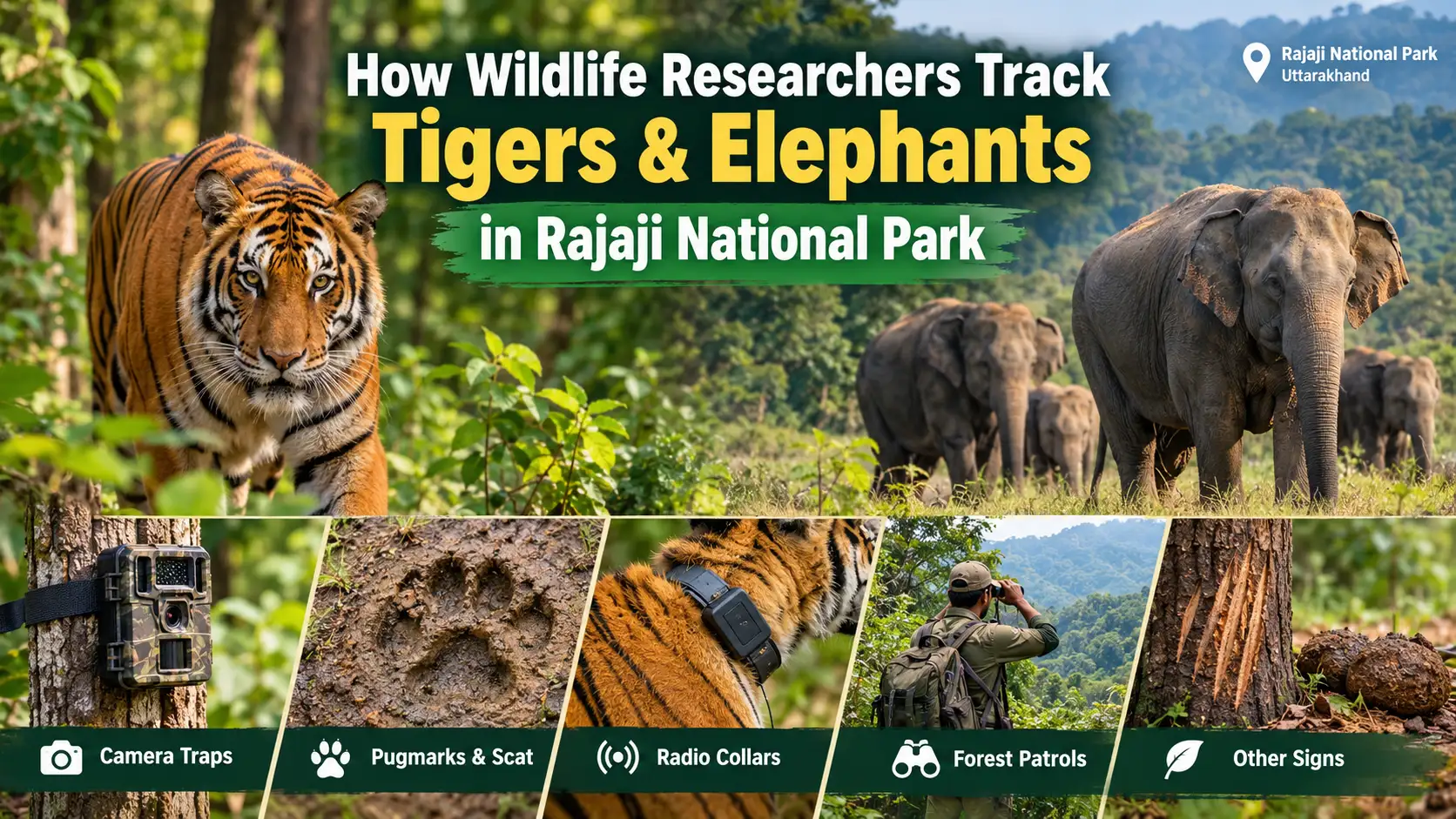
How Researchers Track Tigers & Elephants in Rajaji National Park
Learn how researchers use camera traps, pugmark tracking, patrols and radio collars to monitor tigers and elephants in Rajaji National Park near Rishikesh.
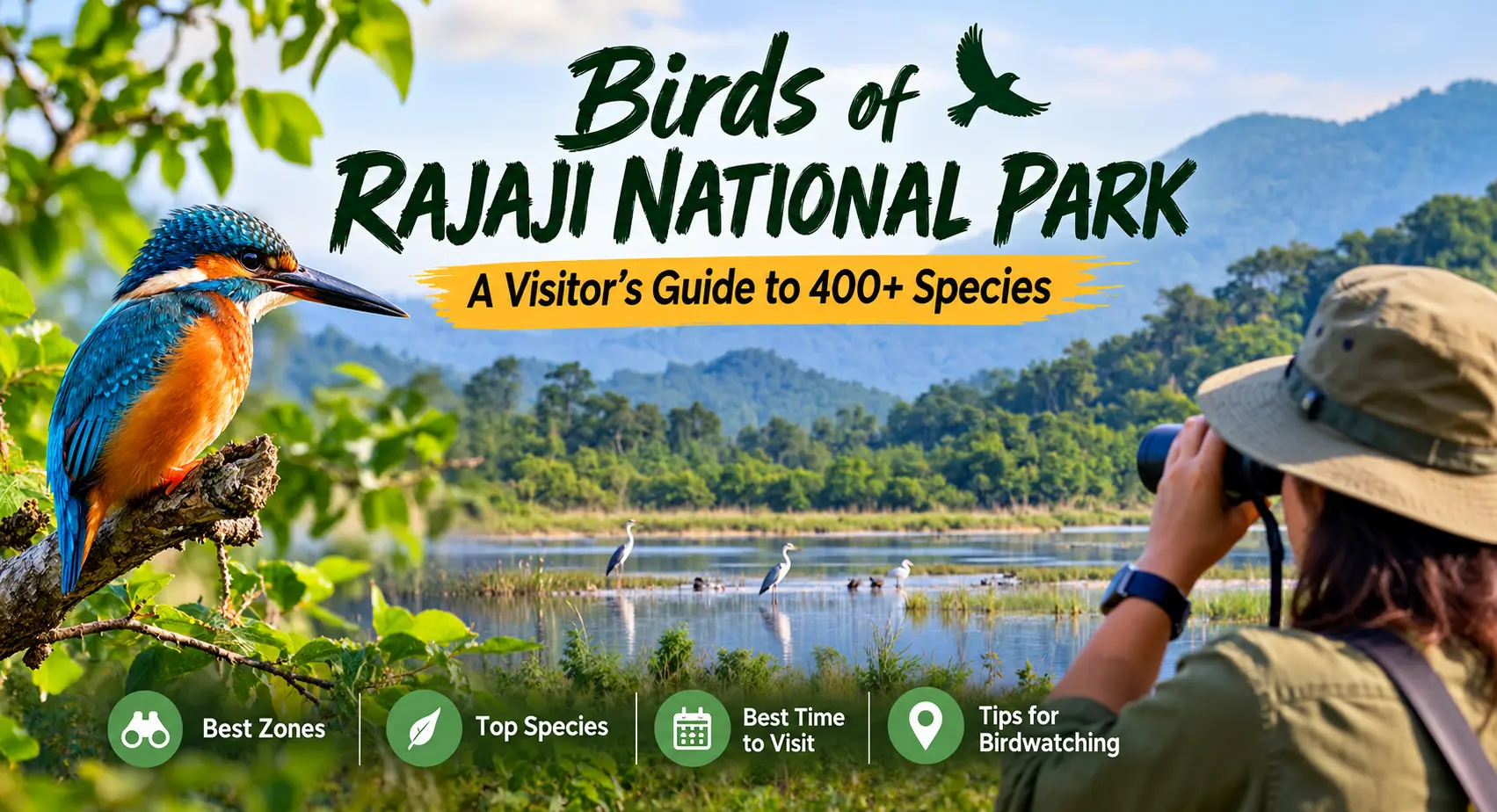
Birds of Rajaji National Park – A Visitor's Guide to 400+
Discover the birds of Rajaji National Park. A visitor's guide to 400+ species, the best zones for birdwatching, and when to visit.

Rajaji National Park vs Jim Corbett – Which Suits You?
Comparing Rajaji National Park and Jim Corbett? See which offers a quieter, more diverse safari experience for your Uttarakhand trip.