Shashi Ranakoti
Owner
Rajaji National Park Safari Rules – What You Can and Cannot Do Inside the Park
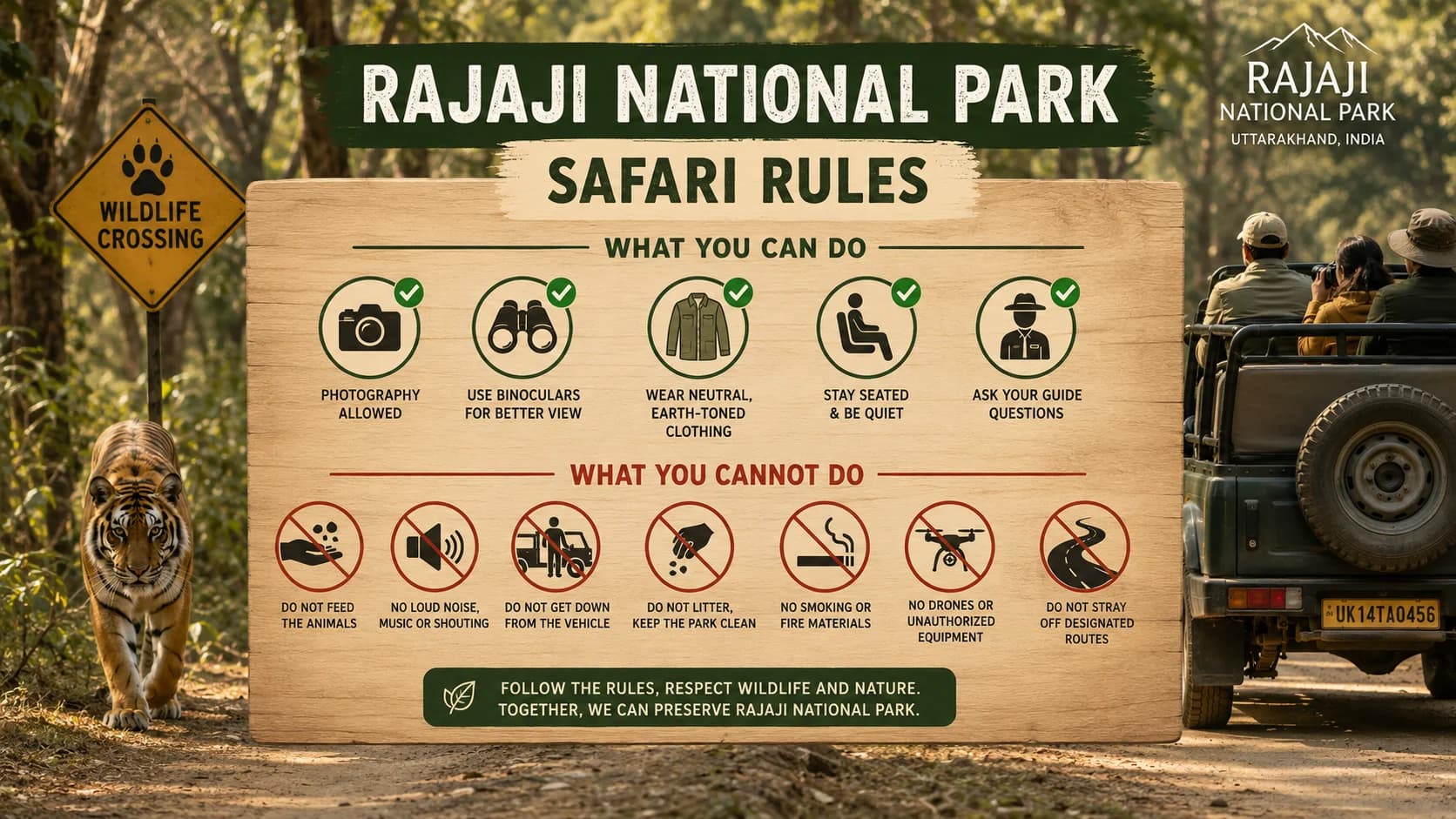
A safari inside Rajaji National Park isn't just about spotting tigers and elephants - it's about entering a protected, living ecosystem where a specific set of rules exists for very real reasons. These rules aren't bureaucratic red tape. They protect the animals, keep the habitat undisturbed, and, in many cases, directly improve your own chances of a good sighting.
If you're planning your first safari at Rajaji National Park near Rishikesh, understanding these dos and don'ts before you arrive will help you have a smoother, safer, and genuinely more rewarding experience.
Why Safari Rules Exist in the First Place
It's easy to see forest department rules as restrictions, but most of them exist for two simple reasons: your safety and the animals' wellbeing. Rajaji is a tiger reserve, which means every rule enforced inside the park is designed to minimize human disturbance to a wild, functioning ecosystem while keeping visitors safe around genuinely wild animals.
Understanding the reasoning behind each rule tends to make people follow them more naturally, rather than treating them as inconvenient restrictions imposed for no clear reason.
What You Can Do During a Rajaji National Park Safari
Let's start with what's encouraged and allowed, since a safari should still feel like an engaging, enjoyable experience within these boundaries.
Photography is fully allowed, and in fact encouraged. Bringing a camera, zoom lens, or even a smartphone to capture wildlife moments is completely fine, and many guests specifically plan their safari around photography. Binoculars are equally welcome and genuinely useful, especially for spotting birds or distant wildlife near waterholes.
Wearing neutral, earth-toned clothing - greens, browns, khakis - is not mandatory but strongly recommended, since bright colors can startle animals and reduce your chances of a close sighting. Staying seated and remaining reasonably quiet during the safari is expected, and most experienced guides will gently remind first-timers of this if needed.
Asking your guide questions throughout the safari is absolutely encouraged. A good guide will explain pug marks, alarm calls, and recent wildlife activity as you go, which genuinely enhances the experience beyond just waiting silently for a sighting.
What You Cannot Do Inside the Park
This is the section most first-time visitors actually need clarity on, since some of these rules aren't obvious unless you've done a forest safari before.
Feeding animals is strictly prohibited, and this rule matters more than most people realize. Feeding wildlife disrupts natural foraging behavior, creates dependency on humans, and can actually increase dangerous human-animal encounters over time. No matter how tempting it might seem to toss food toward a deer or monkey, this should never be done.
Loud noise, shouting, or playing music inside the park is not allowed. Beyond disturbing other guests, sudden noise startles animals and can cause them to retreat deeper into cover, reducing sighting chances for everyone in the vicinity, not just your own jeep.
Leaving the vehicle at any point during the safari, except at forest department-designated stops, is strictly forbidden. This isn't just a rule for your safety around wild animals - it's also enforced to prevent disturbance to the habitat itself.
Littering of any kind, including plastic bottles, wrappers, or cigarette butts, is prohibited throughout the reserve. Carrying reusable water bottles and taking your waste back out with you is both a rule and simply responsible forest etiquette.
Smoking and carrying any kind of fire-starting material inside the park is banned, given the extremely high risk of forest fires, particularly during the drier months from March to June.
Straying off the designated safari routes, even if a driver or guide is tempted to chase a sighting, is against forest department regulations. Authorized routes exist to limit human footprint across the reserve while still providing genuine wildlife viewing opportunities.
Finally, carrying speakers, drones, or any unauthorized equipment without prior forest department permission is not allowed, as these can significantly disturb wildlife behavior and are treated as serious violations.
Safety Guidelines: What to Do If You Encounter Wildlife Up Close
Occasionally, a safari jeep may find itself closer to an elephant or tiger than expected. In these situations, calm, deliberate behavior matters far more than most people assume.
If your jeep is close to a wild elephant, the most important thing is to stay completely still and quiet, and trust your guide's judgment on when and how to reverse or move away. Elephants are generally not aggressive unless they feel threatened or cornered, and sudden jeep movement or noise is often what triggers a defensive reaction.
If you're fortunate enough to be near a resting or moving tiger, the same principle applies - stay seated, stay quiet, and let your guide manage positioning. Tigers are naturally cautious around jeeps and typically move away on their own timeline rather than approaching.
Your guide and driver are trained specifically to read animal behavior and maintain safe distances, so following their instructions immediately, without hesitation or argument, is the single most important safety practice during any safari.
Common First-Timer Mistakes Related to Safari Rules
A few patterns show up repeatedly among first-time visitors, and being aware of them in advance can help you avoid an awkward or even risky situation.
Standing up in the jeep for a better photo angle is one of the most common mistakes, particularly when a sighting happens unexpectedly. It's understandable in the moment, but it's against safety protocol and can also spook the animal, ending the sighting for everyone in the vehicle.
Trying to get the driver to move closer to an animal for a better shot is another frequent request guides receive, and a responsible operator will always decline this, regardless of how much a guest insists, since route and distance regulations exist precisely to prevent this kind of pressure.
Bringing children without briefing them on the need to stay quiet is another overlooked issue. Kids are naturally excited during a safari, which is completely understandable, but a quick pre-safari explanation of why quiet, calm behavior matters usually solves this without dampening their enthusiasm for the experience.
Why Following These Rules Actually Improves Your Experience
It's worth reframing these rules not as restrictions, but as the exact behaviors that lead to better sightings. Quiet jeeps see more wildlife. Vehicles that stay on designated routes encounter animals in their natural, undisturbed patterns rather than startled ones. Guests who trust their guide's judgment, rather than pushing for closer encounters, consistently end up with calmer, longer, and more rewarding sightings.
In other words, the rules that exist to protect the forest are, in practice, the same behaviors that make for the kind of safari experience most visitors are actually hoping for.
Final Thoughts
Rajaji National Park's safari rules aren't designed to make your visit feel restrictive - they exist to protect a genuinely wild ecosystem while keeping every visitor safe within it. Understanding these guidelines before you arrive means less confusion during the safari itself, and a far better chance of the kind of calm, undisturbed wildlife encounter that makes a trip memorable.
Whether it's your first safari or your fifth, going in with a clear understanding of what's expected inside the park sets the tone for a respectful, rewarding, and genuinely enjoyable wildlife experience.
Frequently Asked Questions
Get answers to common questions about your safari experience at Raja ji National Park.
Recent Posts
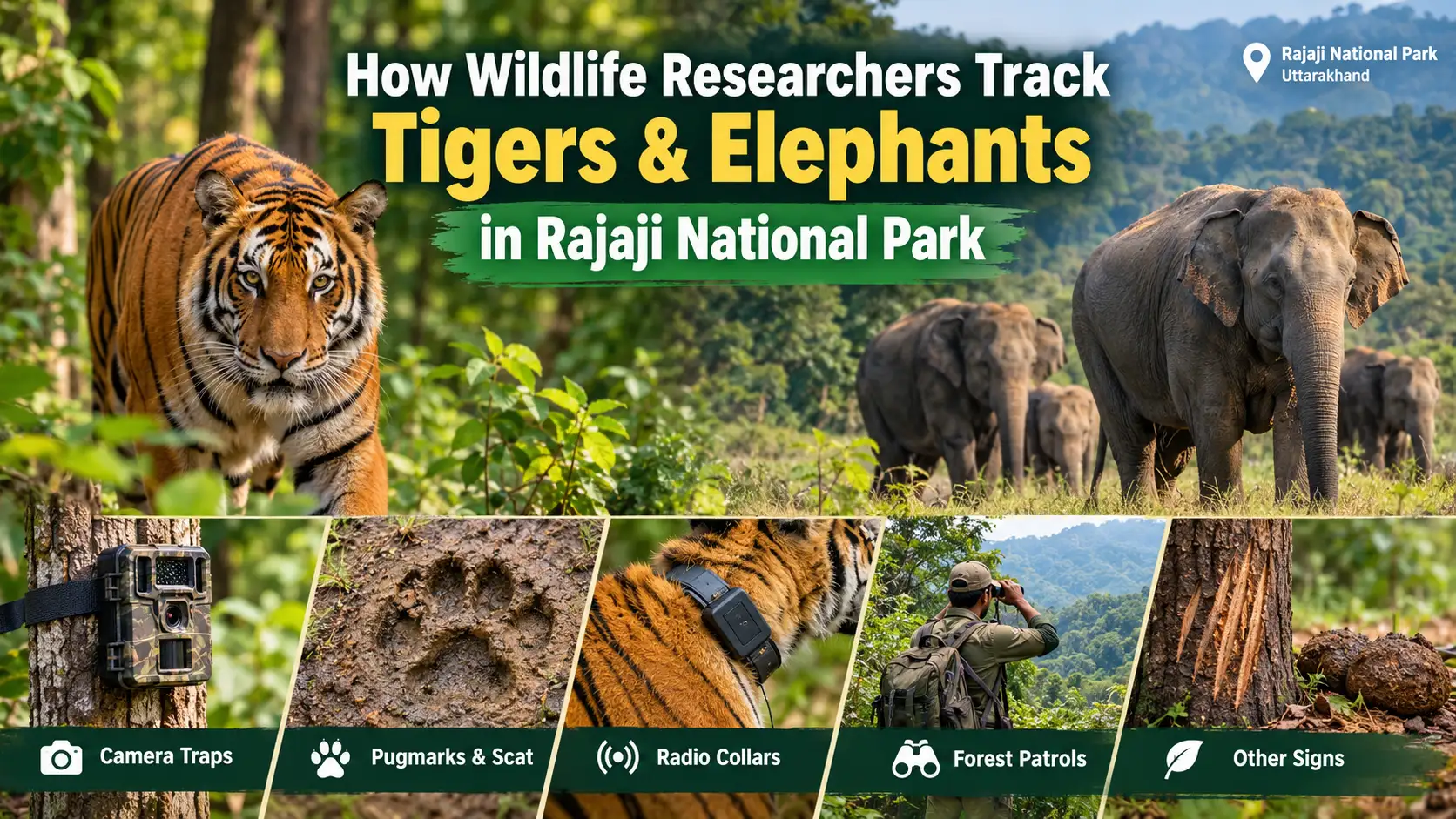
How Researchers Track Tigers & Elephants in Rajaji National Park
Learn how researchers use camera traps, pugmark tracking, patrols and radio collars to monitor tigers and elephants in Rajaji National Park near Rishikesh.

Birds of Rajaji National Park – A Visitor's Guide to 400+
Discover the birds of Rajaji National Park. A visitor's guide to 400+ species, the best zones for birdwatching, and when to visit.
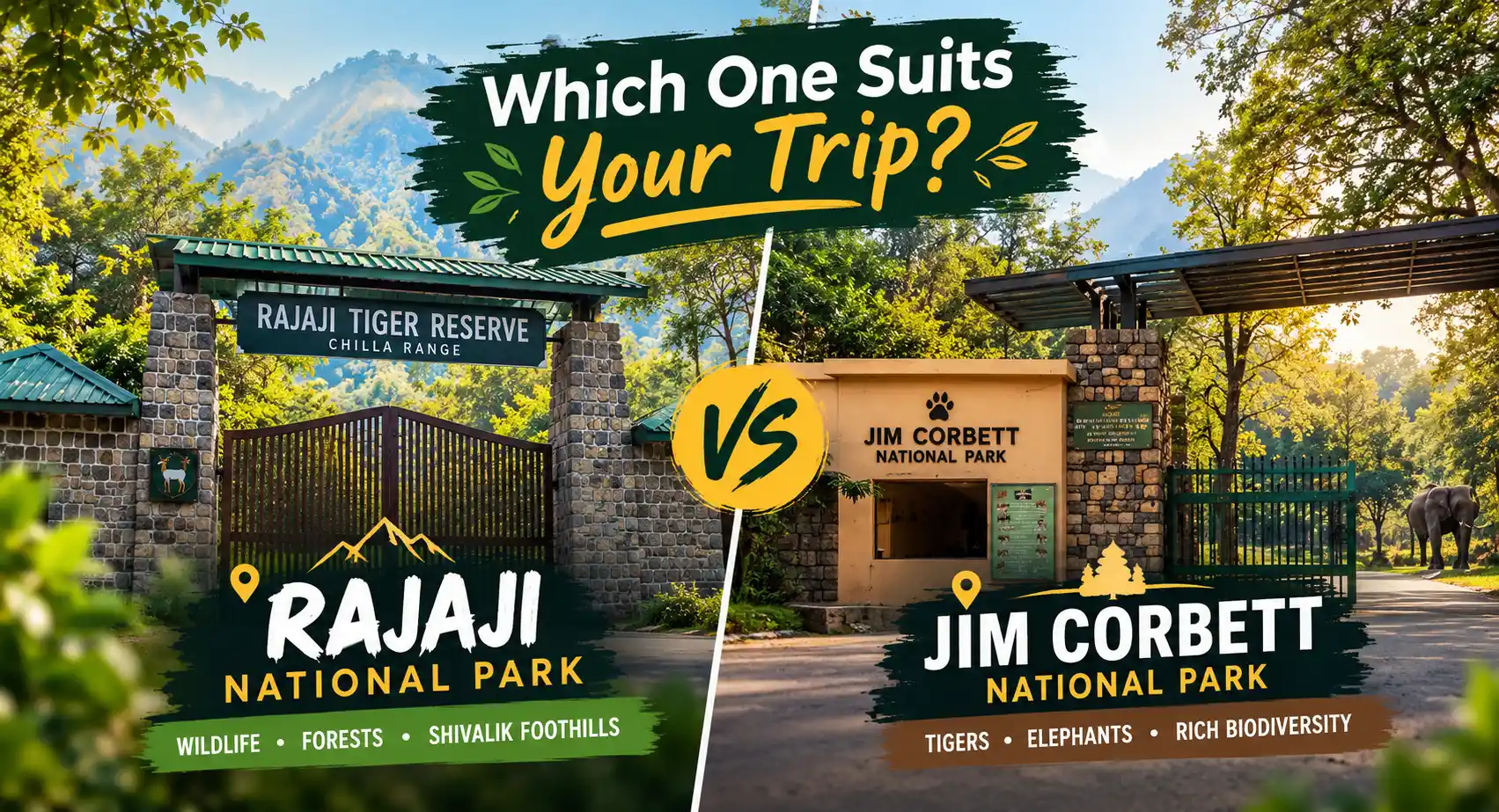
Rajaji National Park vs Jim Corbett – Which Suits You?
Comparing Rajaji National Park and Jim Corbett? See which offers a quieter, more diverse safari experience for your Uttarakhand trip.