Shashi Ranakoti
Owner
How to Read the Jungle: Signs a Tiger or Elephant Is Nearby

Most people think a jungle safari is all about luck. You sit in the jeep, you look around, and you hope that a tiger or an elephant walks out of the trees. But if you ask any forest guide, he will tell you something different. Wildlife is rarely a matter of luck alone. It is a matter of reading the signs.
A fresh footprint on the track, a sudden alarm call from a deer, a heavy silence in the middle of a bright morning. To a trained eye, these small clues tell a full story. And the best part is that you can learn the basics too. In this guide, we explain the signs that show a tiger or an elephant is nearby, in simple words, so your next safari at Rajaji National Park feels more exciting and far more rewarding.
A small honest note before we start: reading the signs improves your chances, but it never guarantees a sighting. The animals are wild, and the forest is big. Enjoy the learning, and treat every sighting as a bonus.
Why Learning the Signs Makes Your Safari Better
A safari where you only look for big animals can feel long and boring. A safari where you read the forest feels like a detective story. Every turn of the track has a clue, and every sound has a meaning.
When you know the signs, three good things happen. First, you stay alert, so you notice things that other guests miss. Second, you understand why your guide suddenly stops the jeep or asks everyone to be quiet. Third, you enjoy the forest even when the big animals stay hidden, because there is always something to read.
Tiger Sign 1: Pugmarks on the Track
A pugmark is the footprint of a big cat, and it is the most famous sign of a tiger. Tigers often walk on soft sand, mud and dusty forest tracks, so their prints show up clearly, especially near water and after a night of light dew.
Here is how to recognise a tiger pugmark:
- Shape: The print is large and round, with a big pad at the back and four toes in the front.
- No claw marks: Like all cats, a tiger keeps its claws pulled in while walking, so you will not see sharp nail marks in the print.
- Size: A tiger print is much bigger than the print of a leopard or a dog. It can be as wide as a grown man's palm or more.
Your guide can also judge how fresh a print is. A fresh pugmark has sharp, clean edges. An old one looks dry, crumbled or washed by wind. If the edges still look crisp and the ground around them is soft, the tiger passed through not long ago.
Tiger Sign 2: Alarm Calls From Deer, Langurs and Peafowl
This is the sign that guides trust the most. The forest has a very strong warning system, and it works like a live news channel. When a deer, a langur or a peacock spots a tiger or a leopard, it gives a loud alarm call to warn others.
- Spotted deer (chital): A sharp, repeated bark, again and again, often with the herd all staring in one direction.
- Langurs: A loud, harsh cough or bark from high in a tree. Langurs sit on top branches, so they often see danger first.
- Peafowl: A loud, nervous, repeated cry that is different from their normal calls.
If you hear an alarm call, ask your guide to stop the jeep, switch off the engine and stay silent. Often the alarm call goes on for a long time, and the best thing you can do is wait patiently and listen to where the sound is coming from. Many tiger sightings happen right after a long alarm call.
If you want to see what happens when guests are lucky, read these tiger sighting stories from Chilla.
Tiger Sign 3: Sudden Silence
The opposite of a loud alarm call is also a sign. Sometimes, the whole forest goes silent without any reason. The birds stop calling, the deer stop moving and even the monkeys stop shaking the branches.
This silence often means that a big predator is somewhere close by, and every animal is hiding or watching. If the forest becomes unusually quiet, keep your voice low and wait. Do not move the jeep without your guide's signal.
Tiger Sign 4: Scrapes, Scratch Marks and Scent Marks
Tigers mark their area to tell other tigers, "this is my home." They do this in a few different ways, and all of them leave clues that you can see.
- Scrapes: A tiger scrapes the ground with its back legs, and it leaves long lines or bare patches of soil along the track.
- Scratch marks on trees: Tigers stretch up and scratch the bark of a tree, leaving deep vertical lines taller than a human's height.
- Scent marks: A tiger sprays a strong smelling liquid on bushes and tree trunks. Many guides can smell it and say that a tiger has passed this way. It has a strong smell that is hard to forget.
These clues do not tell you where the tiger is right now, but they tell you that you are in a tiger's home, and that is a good sign.
Tiger Sign 5: Scat (Droppings) and How to Tell Fresh From Old
It may not sound pleasant, but droppings are one of the most useful signs for a guide. Tiger scat is usually long and thick, and it often has hair or small bone pieces from the animals it has eaten.
The way to judge fresh from old is simple. Fresh scat is dark, moist and shiny, and flies often gather around it. Old scat is pale, dry and crumbly. Fresh signs mean the animal is still close, and old signs mean it moved away days ago.
Signs an Elephant Is Nearby
Elephants are the biggest animals in the forest, but they can still disappear into thick trees in a few steps. The good news is that they leave very big clues behind. If you want to know more about these gentle giants first, read our guide on Asian elephants in the park.
- Big round footprints: An elephant print is huge, round and deep, and it is very different from a tiger's print. In a herd, you will often see many prints of different sizes together, from large adults to tiny calves.
- Broken branches and torn trees: Elephants eat a lot of leaves, bark and grass every day. If you see branches pulled down, bark stripped from a tree trunk, or whole small trees pushed over, an elephant has been feeding there.
- Trampled grass and new paths: A herd moving through tall grass leaves a wide, flattened path. These paths often lead towards water.
- Dung: Elephant dung is large, round and full of grass fibre. Fresh dung is moist, soft and has a strong smell, and it may have flies on it. Dry, crumbly dung is old. If the dung is fresh, the elephant is probably still close.
- Mud on tree trunks: Elephants like to roll in mud and then rub against trees to scratch themselves. A tree with mud smears at a high level is a sure sign that an elephant has been here.
- Sounds and smell: Listen for the sound of branches cracking in the distance, soft low rumbles, or the flapping of big ears. Elephants also have a strong earthy smell, and many guides can sense it before they see the animal.
- Water bodies: Elephants need to drink and bathe every day. The edge of a stream, a canal or a waterhole is one of the best places to look, especially in the early morning and late afternoon.
When you spot a herd, look carefully for the calves. They usually walk in the middle of the group, protected by the adults, and they are one of the loveliest sights of a safari.
Which Zone and Season Give You the Best Signs?
Different zones of the park show different signs, so it helps to pick the zone that matches what you want to read.
- Chilla: This is the zone best known for tiger sightings, and it is also famous for its large elephant population. The route runs along the canal and the river, so you can look for pugmarks on sandy patches and elephant prints at the water's edge. See our full Chilla safari zone guide.
- Motichur: Dense sal forest and big elephant herds make it a good zone to practise reading elephant signs like broken branches and stripped bark. Tigers appear here too, but less often than in Chilla. Read our Motichur safari zone guide.
- Jhilmil Jheel: A calm wetland with swamp deer, peacocks and many birds. The alarm calls of deer and peacocks are easy to hear here. Here is the Jhilmil Jheel safari guide.
Not sure which zone to choose? Our post on the best safari zone compares all of them. You can also see every zone on the safari zones page.
The season matters too. Most zones are open from November to June. In winter, the forest is green and thick after the monsoon, so animals can hide easily, and you need more patience. From March to June, elephant herds pass through more often as water sources shrink, and signs near water become easier to find. Pugmarks and fresh dung are also easier to see on dry, dusty tracks. Dates can change each year, so confirm with us before you plan.
How Guides Read the Forest (and What You Can Do as a Guest)
Forest guides spend years on the same tracks, so they know every turn, every waterhole and every favourite tree. They read the forest as you read a book. They check the ground for fresh prints, listen for alarm calls, and watch how the animals behave. Scientists use similar ideas, along with modern tools, to study wildlife. If you are curious, read how researchers track tigers and elephants in the park.
As a guest, you do not need years of experience. A few simple habits are enough:
- Look at the track, not only the trees: Prints and dung are usually on the ground.
- Listen more than you talk: Alarm calls and rustling sounds are easy to miss if everyone is chatting.
- Ask your guide: Guides love sharing what they see. Ask questions in a low voice and learn from the answers.
- Watch the animals that are not predators: A herd of deer all staring in one direction tells you something is there.
- Be patient: Many sightings happen only after five or ten minutes of waiting in silence.
Wondering how many tigers live in the park, and what that means for your chances? Our guide on tiger numbers and facts explains it clearly.
Safety Rules When You Notice the Signs
Spotting fresh signs is exciting, but this is also the moment when you must be the most careful. Please remember these rules:
- Never get down from the jeep: Even if you see a fresh print, stay inside at all times.
- Keep your voice low: Loud noises scare the animals and can make them angry.
- No flash photography: Flash can disturb or frighten wild animals.
- Keep a safe distance from elephants: If a herd comes close or blocks the track, stay calm, stay seated and follow your guide's instructions.
- Never feed or touch any animal, and do not throw plastic or waste in the forest.
Read the full safari rules and guidelines before your trip. If you are travelling with kids or elders, these safari tips for senior citizens and children will help you plan.
Quick Cheat Sheet: Signs at a Glance
Plan Your Safari the Smart Way
Now that you know what to look for, here are the practical things to plan.
Timings: Entry times change with the season. From 15 November to 15 February, the morning safari starts around 6:30 AM and the evening safari around 1:30 PM. Early mornings are usually the best time, because the animals are active and the tracks still show fresh prints from the night. A safari takes about 2 to 3 hours.
Price: A private jeep costs about Rs. 3,000 to 4,000 per jeep, and a shared seat costs about Rs. 1,000 to 1,500 per person. One jeep seats up to 6 people. The entry fee is about Rs. 150 per Indian guest and about Rs. 250 per vehicle. Prices can change, so please confirm before you book. See the full ticket price guide, and read our post on private vs shared jeep safari to pick the right one. If you love photography or want to stop often to study signs, a private jeep gives you more freedom.
Booking: Choose your zone and time slot, message us on WhatsApp, share the name and age of every guest, pay in advance to lock your slot, and reach the gate 30 minutes early with a valid photo ID such as Aadhaar, passport, driving licence or voter ID. The full steps are in our safari booking guide.
What to wear: Green, brown or dull colours work best. Bright colours can scare animals away. Carry a light jacket and a cap in winter, and sunscreen and water in summer.
Where to stay: Staying close to the gate means you will not miss a dawn start. Our Raja Ji Wild Trail resort is near Chilla Canal, and Raja Ji Delight is a home stay about 8 km from the Chilla Range Gate. Both start at Rs. 3,999 per night. See all options on the stay page.
And please remember: even with all this knowledge, the forest decides what you see. Some days you will see everything, and some days only deer and birds. Both are part of the experience.
Book Your Safari and Put These Signs to the Test
The next time you sit in an open jeep at sunrise, you will not just look at the forest, you will read it. Every print, every sound and every silence will mean something. That is what turns a normal trip into a story you will tell for years.
Ready to try it yourself? Plan a jungle safari at Rajaji National Park with us. Message us on WhatsApp at +91 7906333701 with your dates, and we will help you choose the zone, the jeep and the stay. You can also visit Rishikesh Tiger Safari to see all our services, or read our complete park guide for more trip ideas.
Frequently Asked Questions
Get answers to common questions about your safari experience at Raja ji National Park.
Recent Posts

Chilla Safari Zone Guide 2026: Timings, Price & Booking
Planning a Chilla zone jeep safari near Rishikesh? Get timings, price, tiger chances, best season and booking tips for 2026.

Motichur Safari Zone: Timings, Price & Elephant Spotting
Planning a Motichur zone jeep safari near Rishikesh? Get timings, price, elephant sightings, best season and booking tips.
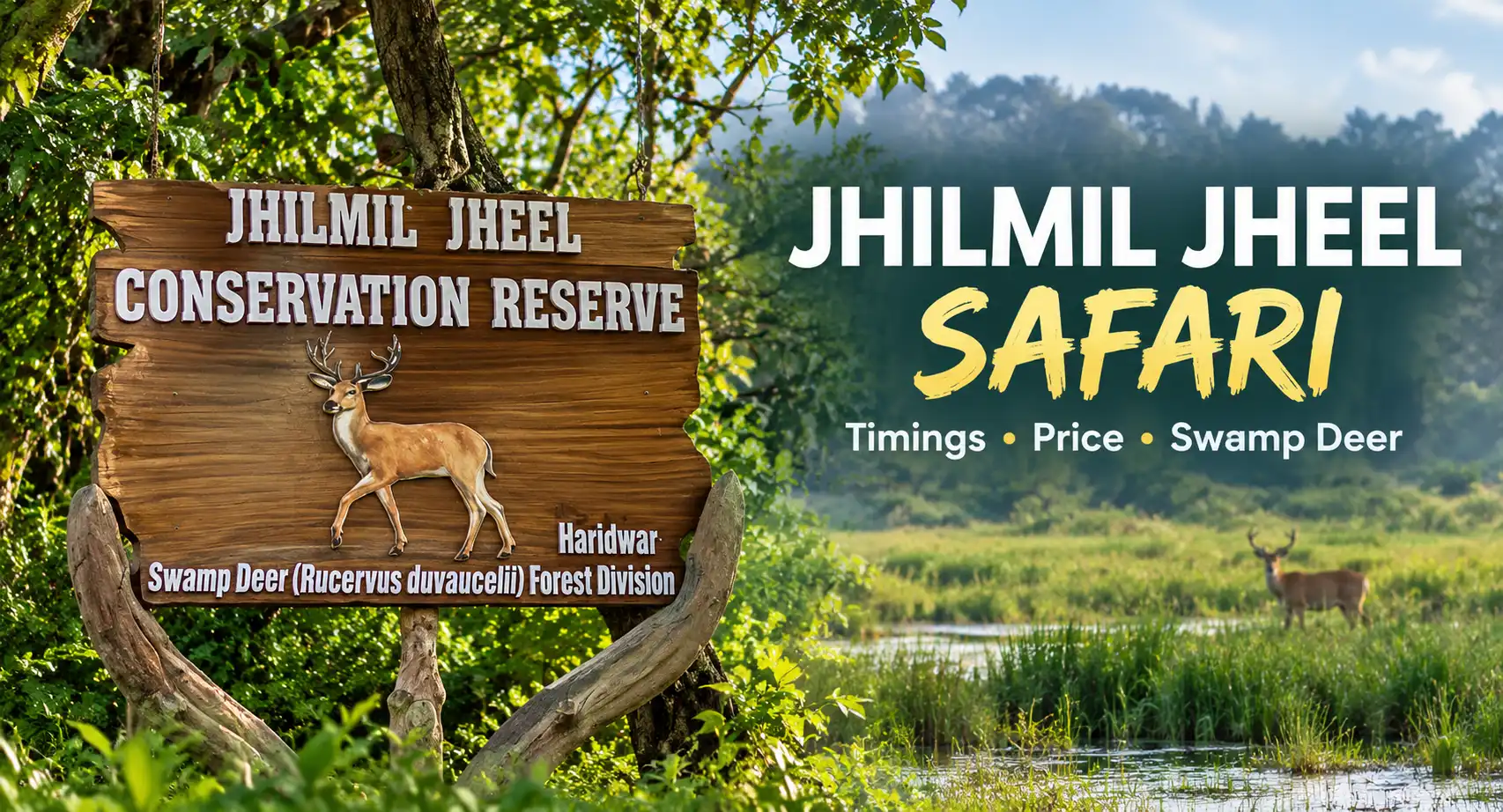
Jhilmil Jheel Safari 2026: Timings, Price & Booking
Book a Jhilmil Jheel safari near Haridwar. Jeep timings, price, swamp deer sightings, best time to visit and how to book with Rishikesh Tiger Safari.